
Between homework, video calls with grandma, and endless YouTube breaks, your child’s eyes spend a lot of hours locked onto a screen. It’s a fair question to ask whether all that time adds up to real strain, especially with digital eye strain becoming such a common complaint among kids.
Too much screen time can strain your child’s eyes and may contribute to nearsightedness, though simple habits and regular children’s eye exams can help protect their vision.
What Happens to Your Child’s Eyes During Screen Time
Ask your child why their eyes feel tired after screen time, and you’ll probably get a shrug. There’s a real reason behind that fuzziness.
When your child focuses on something up close, tiny muscles inside their eyes tighten to keep the image sharp. Hold that focus long enough, and those muscles get tired, much like your legs ache after standing in one spot too long.
Blinking slows down, too. Most people blink 15 to 20 times a minute, but that drops to 6 to 8 during screen use. Fewer blinks means less moisture, so eyes start to feel dry and scratchy. Kids’ eyes are still developing, so they feel this strain faster than yours do.
Common Vision Problems Linked to Screen Use
Screen strain doesn’t show up the same way for every child.
Digital Eye Strain and Dry Eyes
Long screen sessions leave the eyes worn out. Your child might mention blurry vision, headaches, or a heavy, tired feeling around their eyes.
Dry eyes bring their own set of complaints. Watch for these signs:
- Redness around the eyes
- A burning feeling
- A gritty sensation, like sand stuck under the lids
- Neck and shoulder soreness from hunching toward the screen
Nearsightedness and Focus Trouble
Too much close-up work can shape how the eye grows. Over time, distant objects like the classroom board or a street sign start to look blurry.
Here’s why: when the eye spends hours focused up close, the eyeball can grow slightly longer. That extra length makes it harder to see things far away, and the change tends to stick around.
Signs of Eye Strain to Watch For
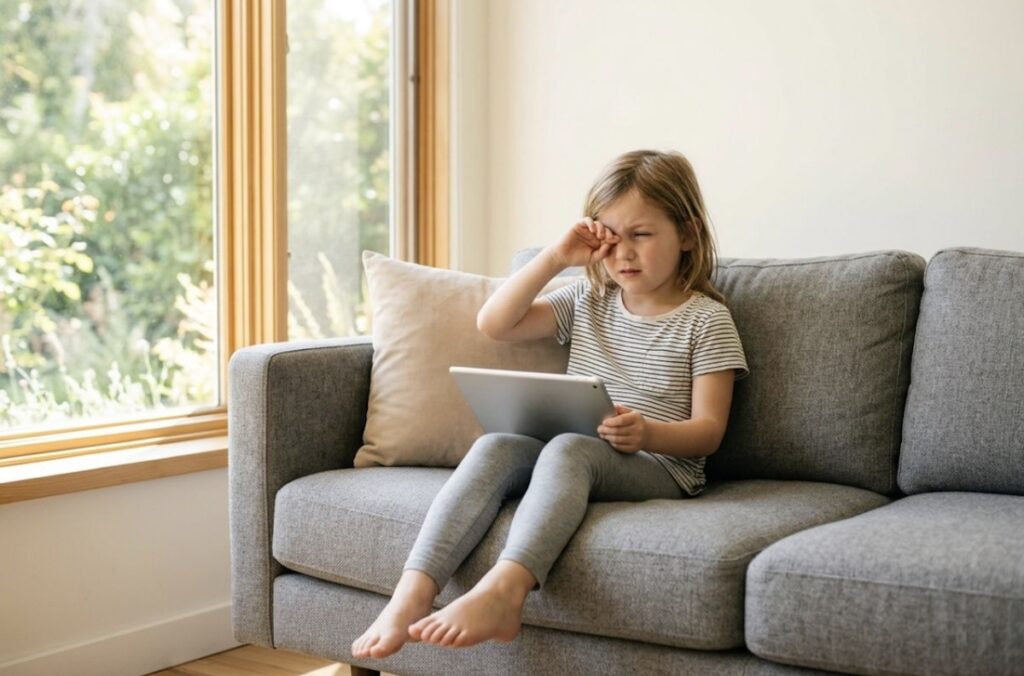
Kids don’t always say “my eyes hurt.” They show you instead. Keep an eye out for these habits:
- Frequent eye rubbing
- Squinting at the screen
- Frequent headaches
- Complaints of aching or tired eyes
- Pulling away from screens or losing interest in reading
A child who used to love story time but now pushes the book away might be dealing with tired eyes, not a change of heart.

Smiling child in a blue shirt holding a red ball in a sunny, grassy park with trees.
Simple Ways to Protect Your Child’s Eyes
The good news? A few small habits go a long way toward easing that strain. Start here.
The 20-20-20 Rule
This one’s easy to remember. Every 20 minutes, have your child pause and look at something 20 feet away for 20 seconds. That short break lets the focusing muscles relax.
Get Outside Every Day
Aim for 2 hours of outdoor play each day. Time spent looking at distant things in natural light helps the eyes develop and may slow the pace of nearsightedness.
Screen Setup and Lighting
Where the screen sits makes a real difference. Keep it about an arm’s length from your child’s face, and position it a little below eye level so their gaze points slightly downward.
Lighting matters, too. Lower the screen brightness to match the room, and adjust lamps or shades to cut glare bouncing off the display. A softer, glare-free screen asks less of your child’s eyes.
When to Schedule an Eye Exam
Some vision changes stay hidden until an exam brings them to light. A child can adapt to blurry vision without ever mentioning it, which is why regular checks matter.
Plan for an eye exam in these situations:
- Schedule a first full exam by age 6
- Book a visit for ongoing headaches or dry, irritated eyes
- Set up yearly checks for kids who wear glasses or spend heavy hours on screens
An optometrist can measure how your child’s eyes focus and track any changes over time. Finding a small change early gives you more room to manage it.
Give Your Child’s Eyes a Break
Screens aren’t going anywhere, but a few habits can keep your child comfortable while they learn and play. Schedule an eye exam with Total Vision Pasadena, and let our team help you build a routine that fits your family. Book your child’s appointment today.