

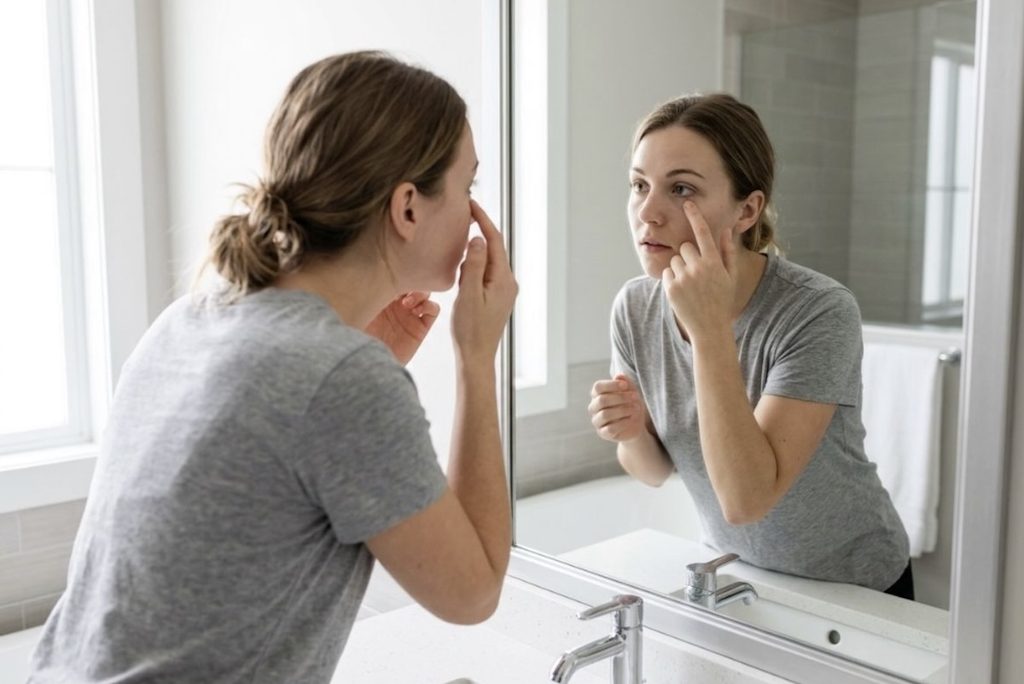
Swelling along the eyelid gets noticed fast, mostly because it sits right there every time you pass a mirror. A tender bump that stings when you blink can leave you wondering whether something more serious is happening.
In most cases you’re dealing with a stye, one of the more common eyelid complaints your optometrist hears about. A stye can cause swelling that seems slow to go down, though most fade within a week once you treat the area gently at home.
Stye Symptoms to Watch For
A stye is a small infected lump near the base of an eyelash. Bacteria get trapped inside an oil gland, and your body responds by sending extra fluid and white blood cells to the spot. All that activity is what makes the lid puff up and feel sore.
A stye tends to announce itself quickly. The bump and the soreness usually arrive together within a day, and a few other signs tend to come along with them:
- A red, tender bump along the edge of the eyelid
- Puffiness that makes the lid feel heavy
- Watery eyes or a gritty feeling when you blink
- A spot that looks and feels a lot like a pimple
- Light sensitivity while the area is inflamed
Some people get one stye and never think about it again. Others notice them coming back, often in the same part of the lid.
How Long Stye Swelling Should Last
Most styes clear up within a week. The swelling doesn’t disappear overnight, though, so give it a few days of steady care.
When you hold a warm compress against the bump, the area can look worse for a short stretch. That’s expected. Heat brings more blood flow to the gland and softens the oil inside, which encourages it to open and drain.
Once it drains, the lump shrinks over several days as the fluid clears. A little tenderness can stick around even after the bump is gone.
What Keeps a Stye From Going Down
A stye that lingers usually has something working against it, and it’s often a habit you’d never connect to your eyelid:
- Squeezing or popping the bump, which pushes bacteria deeper into the lid
- Eye makeup left on overnight, or products that have been open for months
- Contact lenses worn while the lid is inflamed
- Ongoing eyelid inflammation that keeps the glands clogged and the tissue tender
- Rubbing your eyes through the day, which reintroduces bacteria
Skin conditions like rosacea and seborrheic dermatitis can also keep the oil glands congested, making repeat styes more likely.

How a Chalazion Differs From a Stye
If a lump sticks around for weeks and barely hurts, you may be dealing with a chalazion. It forms when an oil gland gets blocked rather than infected.
A chalazion tends to sit deeper in the lid and feel firm, and it can take weeks or a few months to go away. Warm compresses still help. A chalazion large enough to press on the eye may need treatment in the office.
Home Care for Stye Swelling
Most of the work happens at home, and it’s simple enough to fit around a normal day. Try these while the lid heals:
- Hold a warm, moist compress on the closed lid for about 10 minutes, 3 to 6 times a day
- Wash the lid margin with a mild cleanser or a lid wipe to clear away oil and debris
- Wear glasses instead of contact lenses until the bump clears
- Set aside eye makeup, and replace anything you’ve had open longer than 3 months
Leave the bump alone, however tempting it gets. A stye that drains on its own protects the surrounding skin and keeps bacteria from spreading along the lid.
When to See an Optometrist About a Stye
Home care handles most styes. A few situations call for a closer look, though, so book an exam if you notice any of these:
- Swelling that spreads across the lid or onto your cheek
- Changes in your vision
- Pain that keeps building instead of easing
- No improvement after a week of consistent care
Your optometrist can drain a stubborn stye or prescribe an antibiotic ointment when an infection is spreading. We’ll also look at whether blocked oil glands are setting you up for the next one. Mention any styes you’ve had before, since a pattern often points to something treatable.
Get That Swollen Eyelid Looked At
A stye that causes swelling that won’t go down doesn’t have to keep bothering you. Total Vision Pasadena can determine whether you’re dealing with a stye or a chalazion and guide you on what comes next. Book an appointment and give that eyelid the attention it needs.